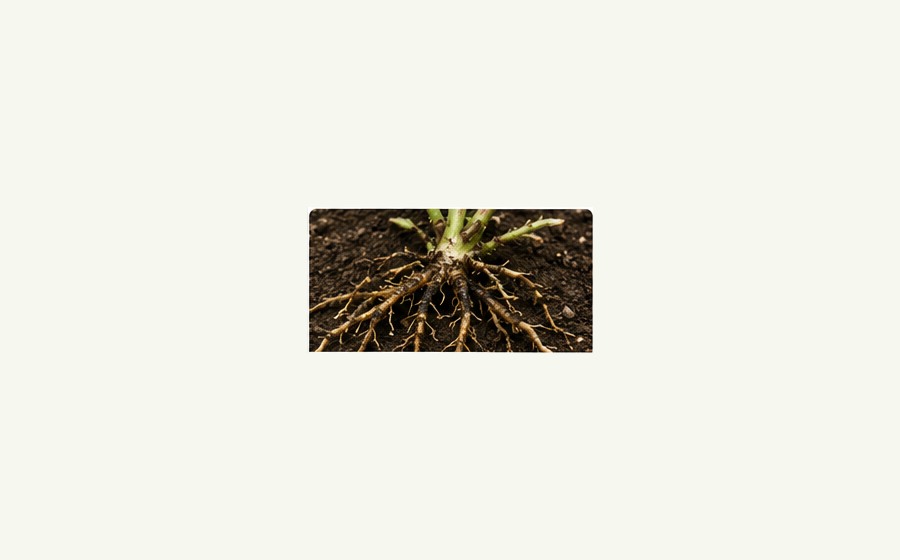
Root rot guide image
Plant disease guide

Root rot

Symptoms: Yellowing, wilting, stunted growth, sour soil smell, and brown or black mushy roots.

Symptoms: Yellowing, wilting, stunted growth, sour soil smell, and brown or black mushy roots.Prevention note: Use well-draining soil, water by soil dryness instead of a calendar, and never leave roots sitting in water.

Quick facts

Symptoms: Yellowing, wilting, stunted growth, sour soil smell, and brown or black mushy roots.

Organic treatment / management:

Prevention note: Use well-draining soil, water by soil dryness instead of a calendar, and never leave roots sitting in water.

  • Stop watering until the plant needs it.
  • Remove rotten roots if repotting.
  • Repot into fresh airy mix.
  • Use a pot with drainage and avoid oversized pots.

What to do next

  • Remove the worst infected or damaged tissue when appropriate.
  • Improve airflow, spacing, sanitation, and watering habits.
  • Avoid overhead watering when leaf disease is suspected.
  • Use organic fungicide or copper products only when the label fits the plant and disease.
  • Discard confirmed viral infections rather than propagating from them.

Watch-outs

Do not compost severe disease material unless your compost system gets hot enough to destroy pathogens.

FAQ

How do I use this plant disease guide?

Start with the light, soil, water, symptom, or purpose notes on this page, then make one careful change at a time.

What is the biggest mistake with Root rot?

Do not compost severe disease material unless your compost system gets hot enough to destroy pathogens.

When should I get more help?

Get local help if the plant is valuable, symptoms are spreading quickly, or outdoor disease and pest problems may affect nearby plants.