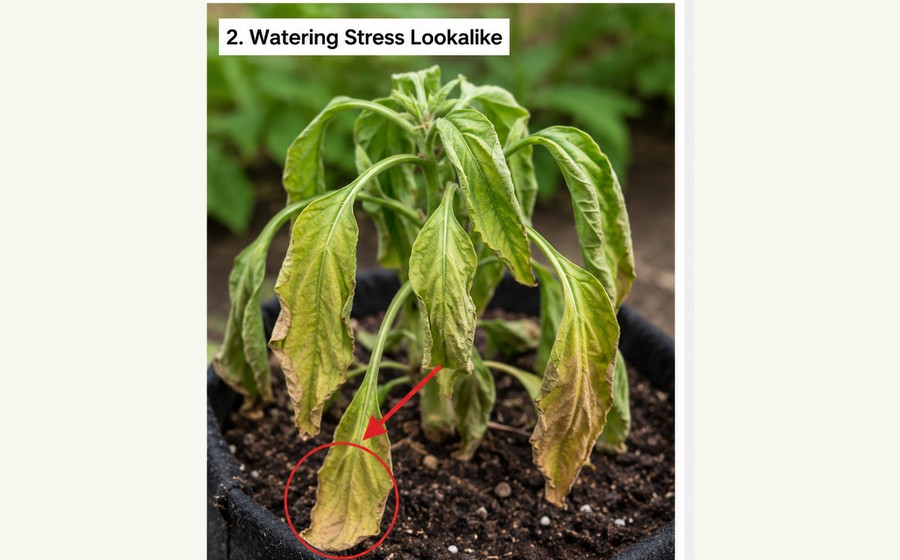
Overwatering / root oxygen stress guide image
Plant deficiency guide

Overwatering / root oxygen stress

What it looks like: Yellowing, drooping, soft stems, fungus gnats, and sour-smelling soil.

What it looks like: Yellowing, drooping, soft stems, fungus gnats, and sour-smelling soil.Organic cure list: Prevention note: Roots need oxygen as much as water.

Quick facts

What it looks like: Yellowing, drooping, soft stems, fungus gnats, and sour-smelling soil.

Organic cure list:

Prevention note: Roots need oxygen as much as water.

  • Let the pot dry appropriately.
  • Improve drainage.
  • Remove rotted roots if repotting.
  • Use chunkier mix for indoor plants.

What to do next

  • Confirm the symptom pattern on new leaves versus older leaves.
  • Check watering, drainage, roots, and pH before adding fertilizer.
  • Start with compost, worm castings, or the gentlest listed organic support.
  • Track new growth for improvement over 1–3 weeks.
  • If the problem continues, test soil or compare with pest and disease signs.

Watch-outs

Do not treat one leaf photo as proof. Nutrient issues often look like watering stress, pH lockout, root damage, heat, cold, or pests.

FAQ

How do I use this plant deficiency guide?

Start with the light, soil, water, symptom, or purpose notes on this page, then make one careful change at a time.

What is the biggest mistake with Overwatering / root oxygen stress?

Do not treat one leaf photo as proof. Nutrient issues often look like watering stress, pH lockout, root damage, heat, cold, or pests.

When should I get more help?

Get local help if the plant is valuable, symptoms are spreading quickly, or outdoor disease and pest problems may affect nearby plants.