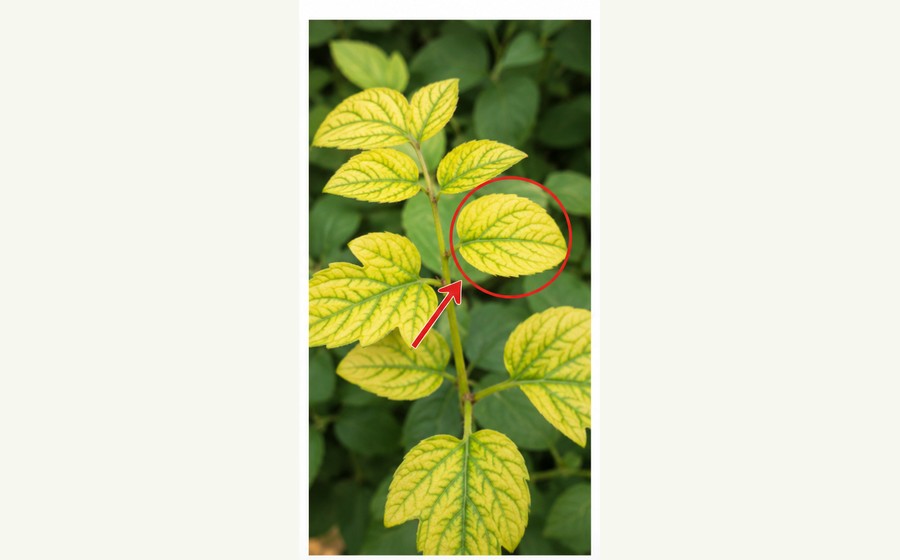
Iron deficiency guide image
Plant deficiency guide

Iron deficiency

What it looks like: Young leaves turn yellow while veins stay greener. Older leaves may stay normal at first.

What it looks like: Young leaves turn yellow while veins stay greener. Older leaves may stay normal at first.Organic cure list: Prevention note: High pH commonly locks iron out even when iron is present.

Quick facts

What it looks like: Young leaves turn yellow while veins stay greener. Older leaves may stay normal at first.

Organic cure list:

Prevention note: High pH commonly locks iron out even when iron is present.

  • Check pH before treating.
  • Use compost and acid-appropriate potting media.
  • Use organic-approved chelated iron if confirmed.
  • Avoid over-liming.

What to do next

  • Confirm the symptom pattern on new leaves versus older leaves.
  • Check watering, drainage, roots, and pH before adding fertilizer.
  • Start with compost, worm castings, or the gentlest listed organic support.
  • Track new growth for improvement over 1–3 weeks.
  • If the problem continues, test soil or compare with pest and disease signs.

Watch-outs

Do not treat one leaf photo as proof. Nutrient issues often look like watering stress, pH lockout, root damage, heat, cold, or pests.

FAQ

How do I use this plant deficiency guide?

Start with the light, soil, water, symptom, or purpose notes on this page, then make one careful change at a time.

What is the biggest mistake with Iron deficiency?

Do not treat one leaf photo as proof. Nutrient issues often look like watering stress, pH lockout, root damage, heat, cold, or pests.

When should I get more help?

Get local help if the plant is valuable, symptoms are spreading quickly, or outdoor disease and pest problems may affect nearby plants.